Frog Hinge Guide: 3-Inch, 4-Inch, 5-Inch Sizes and No-Drill Installation
A factory guide to frog hinges: what they are, how the no-drill clip-on mechanism works, which of the 3-inch, 4-inch and 5-inch sizes to choose, step-by-step installation, and a supplier checklist.
What Is a Frog Hinge and Why Is It Called That?
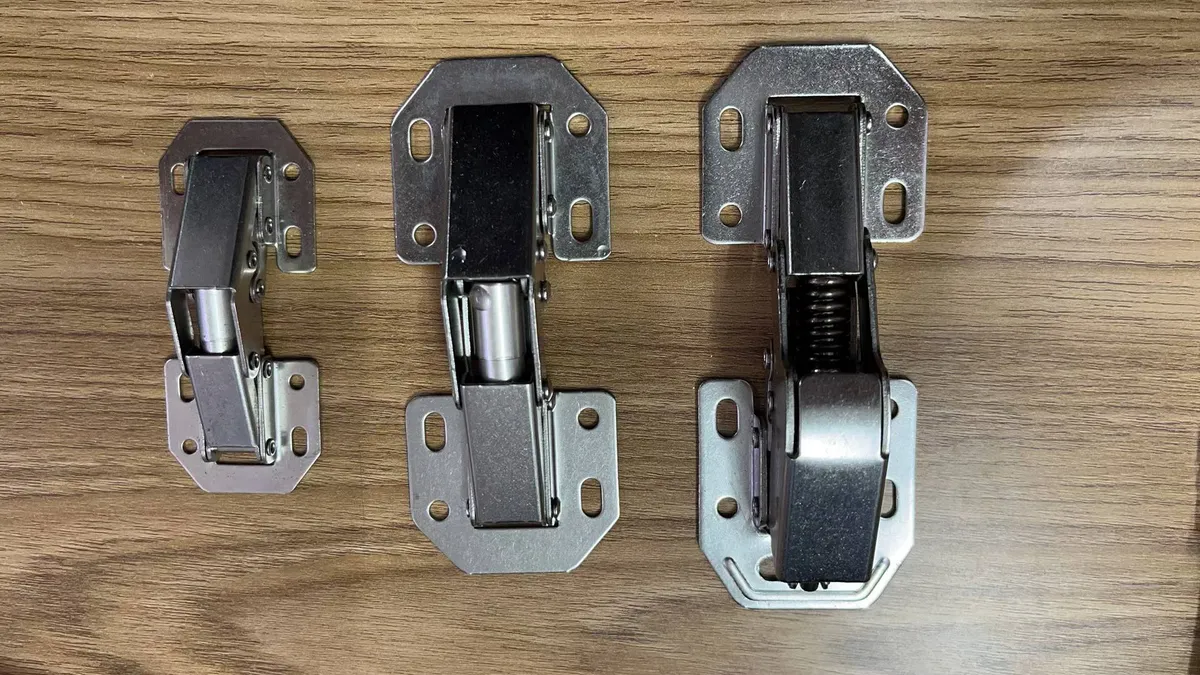
A frog hinge is a two-piece, clip-on hinge that attaches to the edge of a cabinet door without drilling a 35 mm cup hole and without screws. One part slides onto the door edge and the other clips onto the cabinet side panel; the two click together like a spring-loaded jaw — which is where the frog name comes from. Because nothing is screwed or bored into the door surface, a frog hinge installs in seconds and keeps doors fully reversible, an advantage on production lines and for kitchens that ship flat-packed. Frog hinges are usually made from cold-rolled steel or stainless steel 201/304, and one frog hinge body suits full-overlay, half-overlay and inset cabinet doors with a simple change of the base plate. Typical frog hinge sizes are 3 inches (75 mm), 4 inches (100 mm) and 5 inches (125 mm), measured across the hinge length — exactly the range we stock in our frog hinge product line. For a broader overview of hinge types and terminology, see the Wikipedia article on hinges.
Frog Hinge Sizes: 3-Inch, 4-Inch or 5-Inch
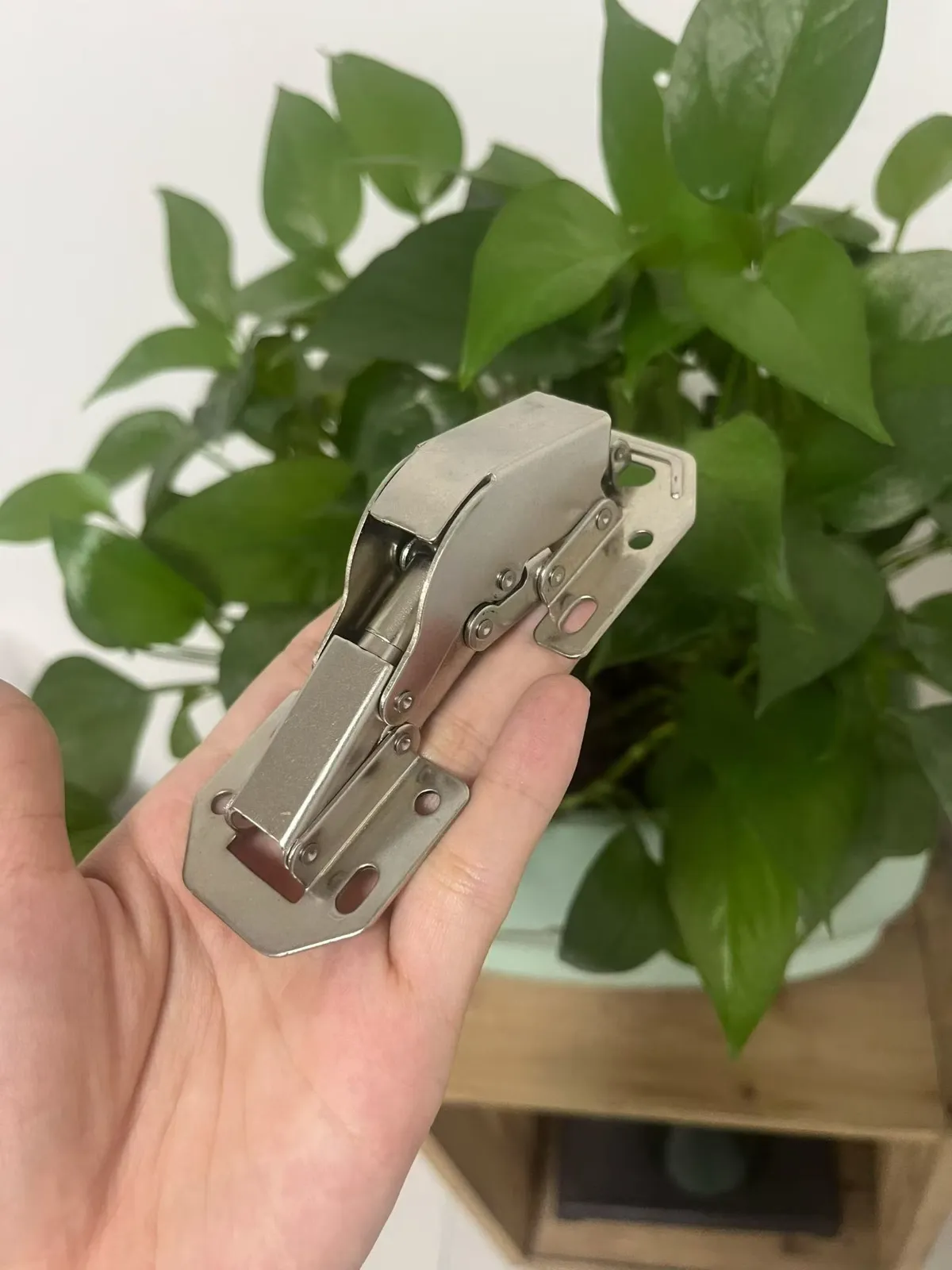
Frog hinges are sold by hinge length: the 3-inch frog hinge (75 mm), the 4-inch frog hinge (100 mm) and the 5-inch frog hinge (125 mm). As a rule, small doors and drawer fronts take the 3-inch size, standard cabinet doors use 4-inch frog hinges, and larger or heavier doors — pantry doors, wardrobe doors, tall overlay panels — work better with a 5-inch frog hinge because the longer leaf spreads the load across more of the door edge. If your kitchen program mixes door heights, order a test sample of each size before committing: check the door gap, the overlay style (full, half or inset) and the panel thickness (18–40 mm). A reliable manufacturer stocks all three frog hinge sizes in buffered soft-close and standard versions, with nickel, chrome, bronze or black finishes, so you can standardize one hinge family across an entire kitchen line. Browse the full range in our cabinet hinges collection and compare frog hinges with concealed cup hinges and other options.
How the No-Drill Frog Hinge Clip-On Mechanism Works
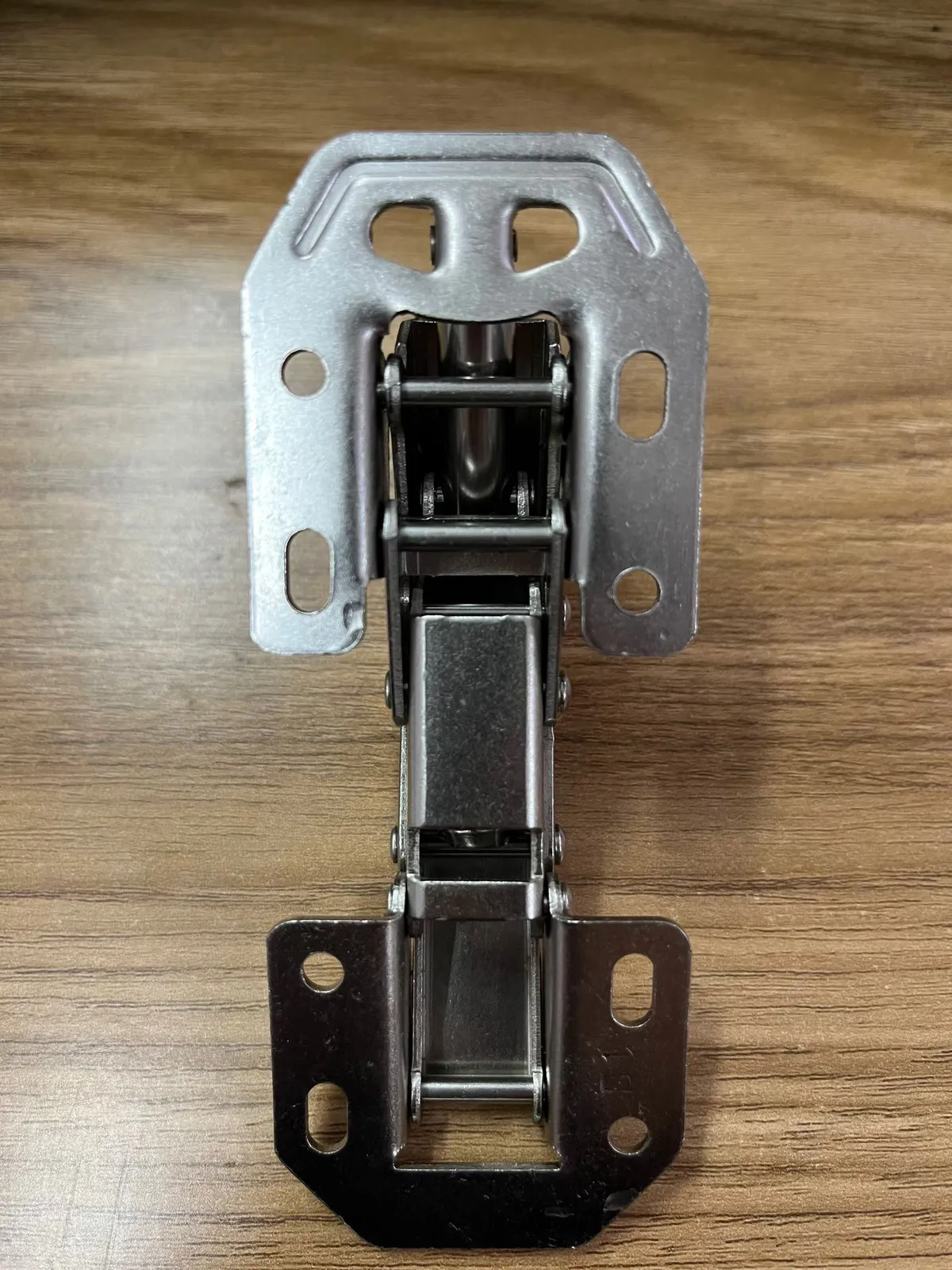
The no-drill frog hinge uses a spring-loaded clip mechanism: the door leaf slides over the door edge and a slider locks it in place, while the frame leaf snaps onto the cabinet side panel. Assembly is tool-free — you press the hinge shut and the spring does the rest, which is why these are often called clip-on hinges or tool-free hinges. The mechanism is fully adjustable: an adjusting screw on the hinge arm fine-tunes the opening angle between 130° and 170°, and you can convert one frog hinge between full-overlay (straight bend), half-overlay (medium bend) and inset (large bend) mounting simply by swapping the conversion base. This universal design lets a single frog hinge model cover an entire production line, and doors stay reversible at any time. Hinge strength and finish requirements for commercial and residential hardware are described by the Builders Hardware Manufacturers Association (BHMA), whose standards we test our clip-on hinges against.
How to Install a No-Drill Frog Hinge Step by Step
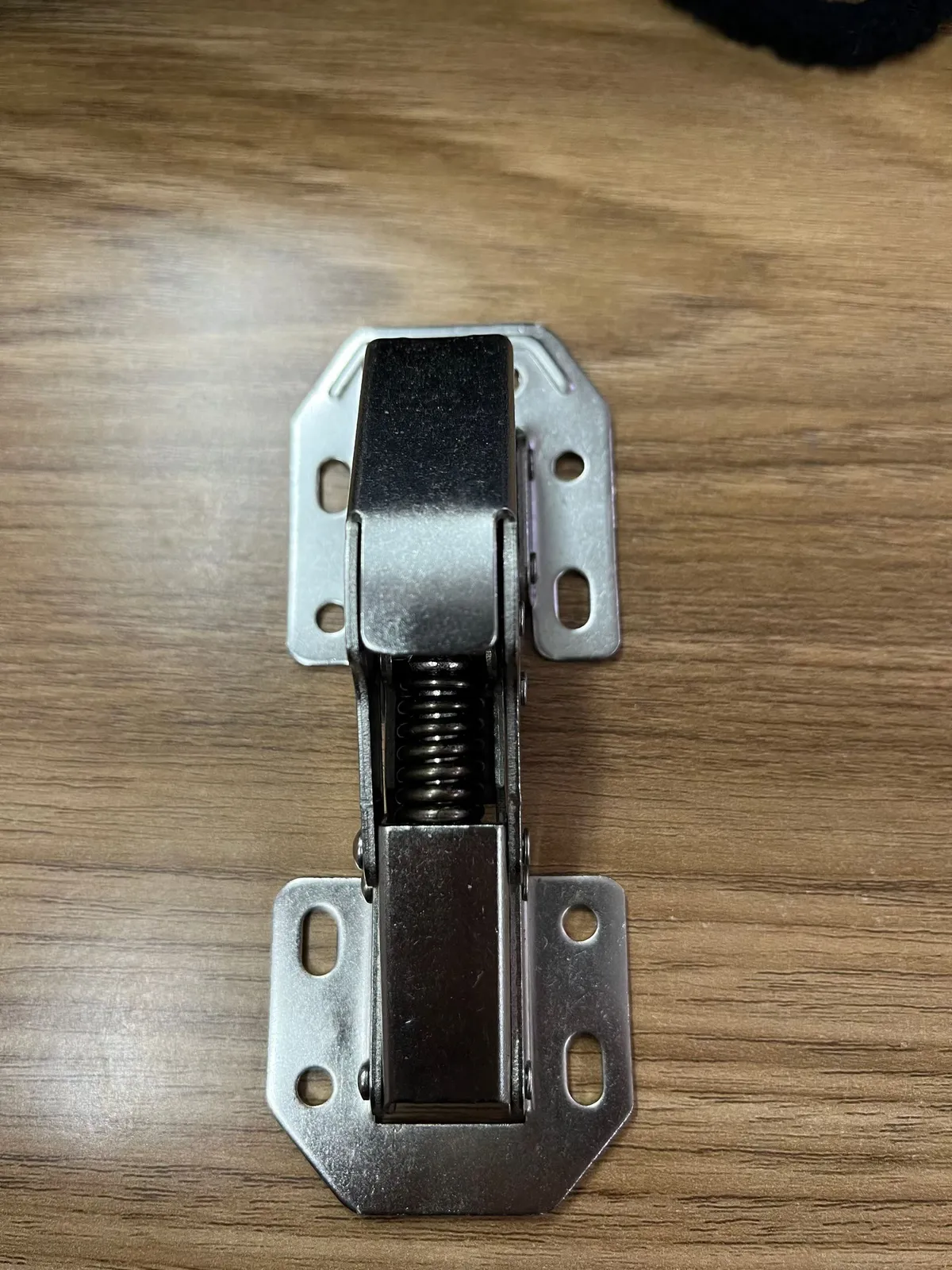
Installing a frog hinge takes less than a minute per door and needs no drilling jig, no 35 mm Forstner bit and no screws. Step 1: slide the door leaf onto the edge of the door panel (18–40 mm panel thickness). Step 2: clip the frame leaf onto the cabinet side panel. Step 3: press the door closed until the spring-loaded jaw clicks — then adjust the opening angle with the arm screw if you need anything between 130° and 170°. To remove the door, release the clip and pull: no tool, no damage, fully reversible. Because frog hinge installation is so fast, many furniture makers use it for RTA (ready-to-assemble) kitchens and production-line cabinet assembly. For installation practice and jig-free drilling tips, Fine Homebuilding has detailed cabinet and door hardware articles. If you are still comparing hinge families, our guide on how to choose cabinet hinges covers overlay, cup spacing, soft-close and load ratings in plain language, and our factory checklist for choosing a furniture hardware supplier lists the 10 questions to ask before you place a production order.
Frog Hinge vs. Concealed Hinge and a Supplier Checklist
Compared with a concealed cup hinge, a frog hinge trades the fully invisible look for a faster, screw-free install: a cup hinge needs a 35 mm Forstner bore per door and is permanent, while a frog hinge clips on and off in seconds, can be moved and reused, and needs no drilling jig on the production line. Frog hinges are also a strong choice for thick panels (18–40 mm) and for RTA furniture, where drilling jigs are impractical. Before you place an order, run this supplier checklist: (1) Does the factory stock all three frog hinge sizes in soft-close and standard versions? (2) Will they send pre-production samples for door-gap and overlay testing? (3) Do they test to BHMA-type strength cycles? (4) What are the MOQ, lead time and export packaging? (5) Are 201/304 stainless and the finishes you need available? Our choosing a furniture hardware supplier guide lists all 10 questions, and you can request a quote directly from our frog hinge product page.
Frequently Asked Questions
Yes. A buffered frog hinge adds a sealed hydraulic damper that slows the door in the final millimeters, so it closes quietly without slamming. The non-buffered version is available for budget programs and for doors that must close freely.
Need a factory quote?
Send your drawing, sample or BOM — our team replies within 24 hours, Mon–Sat.